
What is the Clinical Map?
Feb 06, 2025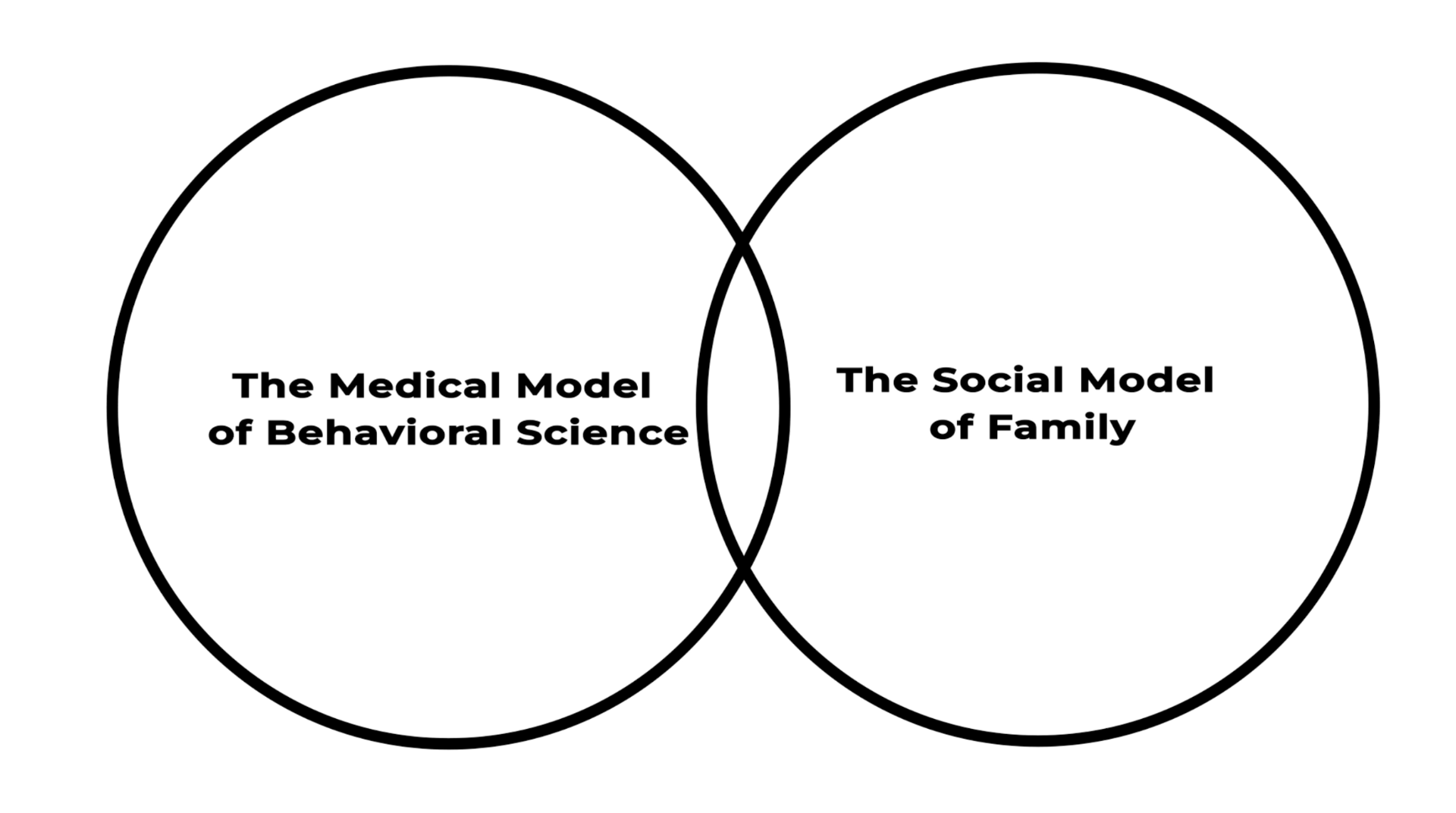
A Practical Guide for Parents and Therapist
Child development is often misunderstood because we reduce it to isolated parts.
We measure behaviors. We track data. We place symptoms into objective categories. And objective categories become identity.
And yet, despite the effort, something is fundamentally wrong and missing with this world view.
We do not fully understand how development organizes itself as a unified system.
Identity isn't found in the objective category. It is found in the relational science of family.
The Clinical Map exists to solve this fundamental confusion.
It is not another technique. It is not a competing therapy model.
The Clinical map is a framework that aims for intelligibility in the parent-child-family relationship—a way to see, organize, and guide the process of child development as it unfolds within the family.
The Problem: Fragmentation in Child Development
Most approaches to intervention fall into one of two categories:
- The Medical Model of Applied Sciences → focused on precision, measurement, and behavior change
- The Social Model of Family → focused on relationship, meaning, and field of experience
Each has value. But when separated, they create fragmentation.
- The Medical Model can become overly reductionistic
- The Social Model can become overly abstract
The Clinical Map integrates both.
It recognizes that development is not random and cannot be fully captured by isolated data.
Children develop through a relational process—one that involves the brain, the body, and the family system working together, simultaneously, across time.
The Core Insight
At its core, the Clinical Map is built on a simple but profound truth:
Behavior is not just objective unit of analysis— Behavior is a Scientific Narrative.
Children are not just emitting behaviors. They are organizing enabling and selecting behavior patterns, building representation of time and space, learning how motor plan and sequence, forming relationships and moving towards appetitive states in the 5-core character structures of child development.
And all of this is happening, simultaneously.
The Clinical Map makes this process:
- Visible
- Practical
- Actionable

The Three Technologies of the Clinical Map
What makes the Clinical Map powerful is that it integrates three core technologies into a single system:
- Top-down and Bottom-up Care Systems
- Five Core Character Structures
- Enabling and Selecting Behavior Patterns
These are not separate ideas. They are interdependent systems that together organize behavior and development.
-
Top-Down and Bottom-Up Care Systems
The first principle is that all development occurs through the interaction of two care systems:
Bottom-Up Care
- Sensory processing and integration
- Emotional attunement
- Embodied interaction
This is the domain of:
- Affect
- Experience
- Attunement
Top-Down Care
- Structure
- Goals
- Language
- Direction
This is the domain of:
- Thinking
- Planning
- Organizing behavior
And here is the key:
These systems must work together. Not separately.
When they are integrated, children move toward what we describe as appetitive states:
- Engaged
- Motivated
- Adaptive
When they are fragmented, children fall into satiated states:
- Rigid
- Disengaged
- Overwhelmed
For example, a child with ADHD-like symptoms is not simply “misbehaving.”
They are:
- Over-relying on bottom-up processes
- Lacking top-down care systems
When both care systems are applied and attuned correctly, behavior reorganizes into functional, interactive patterns.
-
Character Structures: The Objective Values of Development
The second core technology is character structure. Character structures are not abstract traits.
They are:
- Motivational systems
- Biological Behavior pattern
- Developmental narratives
They tell us:
- What the child is invested in
- Where development is lagging or stuck
- Where growth needs to occur
The five core character structures are:
- Exploration
- Play
- Sensory Information Flow
- Social Care
- Elimination of Stimuli
Each represents a domain of objective value. These Character structures determine what is relevant to the child.
From a behavioral perspective, they define:
- Reinforcement systems + socially significant behavior
- Motivating operations
- Functional behavior classes
When Character Structures Break Down
When development is progressing and appetitive, these Character structures:
- Expand
- Integrate
- Support adaptive behavior
But when disrupted or satiated, we see:
- Over-involvement (e.g., repetitive sensory behaviors)
- Under-involvement (e.g., disengagement from people and objects)
These are not random.
They are distortions within character structures.
And until these structures are repaired, development cannot move forward.
-
Enabling and Selecting Behavior Patterns
The third core technology explains how behavior change actually happens.
All human behavior moves from:
- Point A (current state)
- To Point B (desired state)
This movement creates what we call opponent processing. This is what makes us specifically human
Enabling Behavior patterns (Bottom-Up)
- Exploration
- Expression
- Variation
This system generates:
- New behavior
- Possibilities
- Adaptation
Selecting Behavior (Top-Down)
- Structure
- Direction
- Constraint
This system:
- Refines behavior
- Stabilizes outcomes
- Builds efficiency
Integration occurs when enabling + selecting behavior patterns interact within a character structure
This produces:
- Learning
- Generalization
- Meaningful behavior
The Clinical Map restores this balance.

What Happens Without This Framework?
Without understanding:
- Top-down and Bottom-up Care systems
- The 5-core Character structures
- Behavior pattern dynamics
We see predictable outcomes:
- Sensory dysregulation
- Fragmented behavior
- Child developmental delays
- Over-reliance on reward systems
- Increased child and familial psychopathology
Especially in today’s high technological age, where overstimulation and disconnection are increasingly common.

The Goal of the Clinical Map:
The Clinical Map is not theoretical—it is deeply practical.
It allows clinicians and parents to:
- Assess how a child interacts with:
- People
- Objects
- Change
- Build awareness of:
- The body
- The environment
- The relationship
- Transition children from:
Disconnected Satiated states to Connected Appetitive states
The Clinical Map framework changes how you think. Instead of asking:
- “What is the function of this behavior?”
You begin asking:
- “What system is producing this behavior?”
- “What character structure is disorganized in child development and family?”
Instead of forcing behavior change: You organize the conditions for development.
Instead of reacting. You guide.
Instead of being a technician. You become a social engineer who integrates development.
The Clinical Map is not just a tool. It's a pragmatic, relational developmental system in the family that is described through Scientific Narrative technology.
It integrates:
- Behavior (selection)
- Behavior patterns (variation)
- Motivation (character structures)
- Relationship (Top-down and bottom-up care systems)
Into one coherent, family-centered model.
In a world increasingly defined by complexity, fragmentation, and information overload…
What we need is not more data. We need more integrated data, that is found in the Clinical Map!
Get access to the Clinical Map today.
